

If you’re building an AI-powered platform, remember: Your AI workflows and automation experience are the core of your product. They are the brain of modern digital systems and the most powerful way to improve productivity, decision-making, and customer engagement.
You should spend more time designing intelligent AI agents, automation pipelines, and user interactions than focusing only on appearance. Refine the key features of your AI platform—the automation logic, natural language understanding, memory systems, and real-time decision-making that make your product truly intelligent.
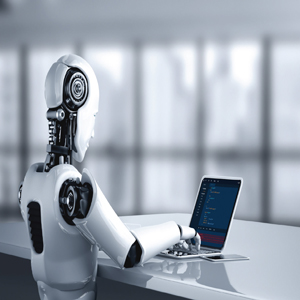
When you build Agentic AI solutions with modern AI frameworks and cloud platforms, you unlock endless possibilities for automation, personalization, and scalability. To help you understand the capabilities of Agentic AI systems, here are some of the most important features and functionalities that make AI applications powerful, efficient, and user-friendly.
AI agents can automate repetitive and time-consuming tasks such as data entry, scheduling, reporting, customer support, and workflow management with minimal human involvement.
The AI system understands human language naturally, allowing users to communicate through text or voice commands in a conversational and human-like way.
Agentic AI can analyze information, evaluate multiple possibilities, and make intelligent decisions automatically based on predefined goals and real-time data.
Multiple AI agents can work together to solve complex tasks, share information, coordinate actions, and improve overall system efficiency.
The platform can provide advanced conversational chatbots capable of answering questions, solving problems, and assisting users 24/7 in real time.
AI agents can manage complete workflows by connecting different systems, APIs, applications, and databases automatically without manual intervention.
The AI system continuously analyzes live data streams to generate insights, predictions, alerts, and recommendations for faster business decisions.
The application provides personalized recommendations based on user behavior, preferences, activity history, and predictive AI models.
AI agents can remember previous conversations, user preferences, and interaction history to deliver more personalized and context-aware experiences.
Users can search documents, databases, and knowledge bases intelligently using semantic search and AI-powered information retrieval systems.
The platform supports voice-based interaction, enabling users to perform actions and receive responses using speech commands.
The system can generate articles, emails, reports, product descriptions, code, social media posts, and marketing content automatically.
AI models analyze historical and live data to forecast trends, customer behavior, risks, and future opportunities for businesses.
The AI can detect emotions, opinions, and customer sentiment from messages, reviews, comments, and social media interactions.
Users receive intelligent notifications, reminders, alerts, and updates based on activities, priorities, and AI-driven insights.
The platform can identify objects, faces, text, and patterns from uploaded images and visual content using computer vision technology.
AI continuously monitors suspicious activities, unusual patterns, and potential security threats to protect users and systems.
The application dynamically adapts content, recommendations, and workflows according to individual user preferences and behavior.
The system integrates with external platforms, CRMs, cloud services, payment gateways, and business tools for seamless automation.
AI agents can organize, summarize, and retrieve information from large datasets, documents, PDFs, and company resources efficiently.
The platform can assist developers by generating code snippets, debugging issues, explaining logic, and automating development tasks.
The AI system supports communication and content generation in multiple languages for global accessibility and better user engagement.
Users can review, approve, modify, or override AI-generated decisions to maintain transparency and operational control.
The AI improves over time by learning from user interactions, feedback, system performance, and newly available data.
The platform can scale AI operations across cloud infrastructure to support thousands of users and high-performance workloads efficiently.
Users can monitor AI performance, user activity, automation success rates, and business insights through advanced visual dashboards.
AI agents can automatically schedule meetings, tasks, reminders, and workflows based on availability and priorities.
The system can extract, classify, summarize, and process information from invoices, forms, contracts, and business documents automatically.
The platform can draft, categorize, prioritize, and respond to emails intelligently to improve communication efficiency.
Teams can interact with AI agents together, share resources, assign tasks, and improve productivity through collaborative AI workflows.
Users can manage data visibility, permissions, AI memory settings, and security preferences for a safer and more transparent experience.


Veloxn Private Limited is a software development company of India. Our Services are Software Development





Head Office : Veloxn Private Limited, 41, Block A, Industrial Area, Sector 62, Noida, Uttar Pradesh 201301
Branch Office : Veloxn Private Limited, Office No. 403, 4th floor, IT Tower B Plot No-7, Techzone 4, Greater Noida West, Uttar Pradesh 201308 India